Hard water guide · Texas
7 Signs You Have Hard Water in Your Home (And What to Do About It)
The most common signs of hard water are white buildup on faucets, cloudy dishes, soap scum, and poor lather — along with stiff laundry, dry-feeling skin, and scale in plumbing or appliances.
Updated 12 min read
Quick answer · USGS hardness levels
0–3.5 GPG
Soft — hardness is unlikely to cause problems
7.1–10.5 GPG
Hard — scale and spotting become common
10.5+ GPG
Very hard — recurring deposits are typical
These problems occur when water contains elevated levels of dissolved minerals, primarily calcium and magnesium. Hard water is especially common in areas where water passes through mineral-rich rock and soil, including many parts of Texas.
While hard water isn’t generally considered unsafe to drink, it can create frustrating household problems. Mineral deposits can accumulate on plumbing fixtures, reduce cleaning effectiveness, and affect the performance of water-using appliances.
The frustrating part? Many homeowners don’t realize their water is causing these problems. If you’ve noticed any of the following seven signs, your home may have hard water. Already have a test result? Jump to the hardness interpreter.
1. White, Chalky Buildup on Faucets and Showerheads
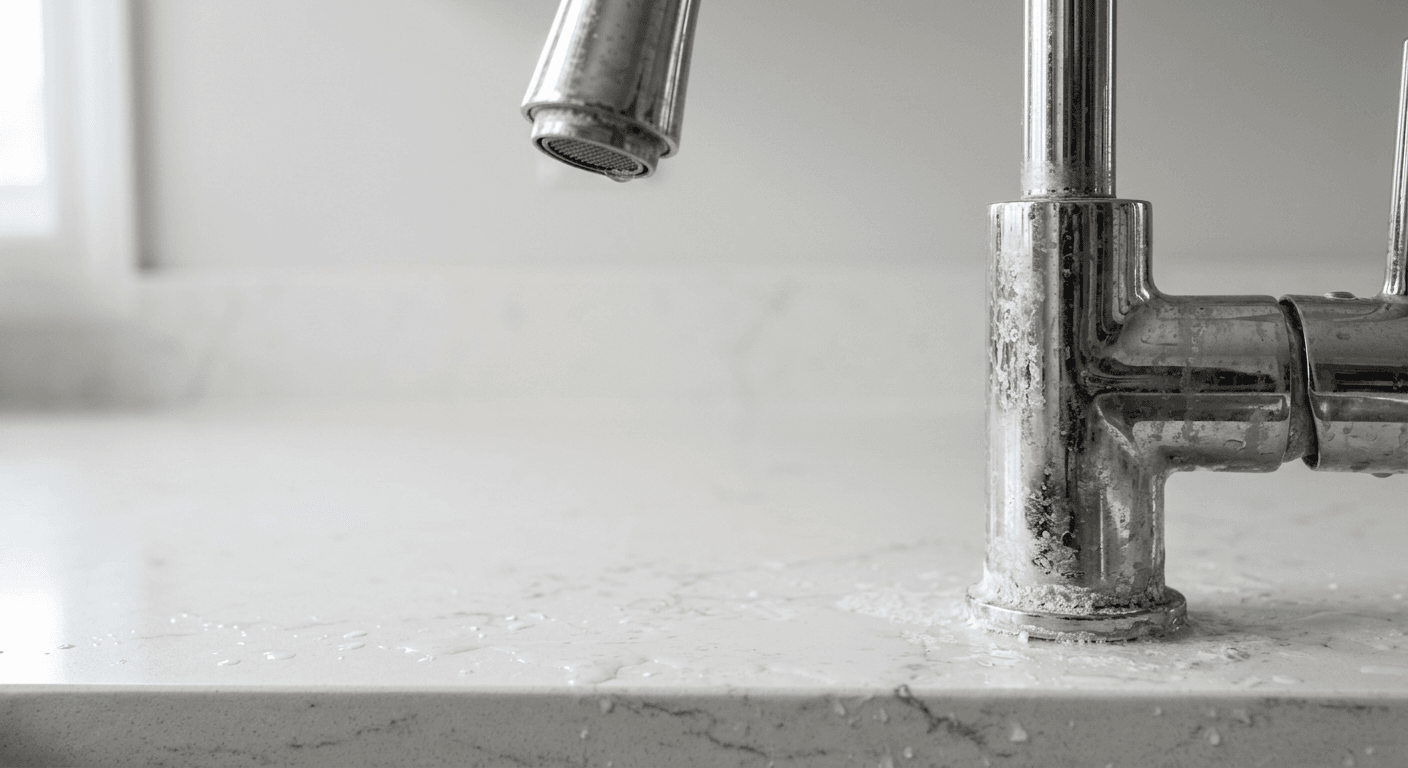
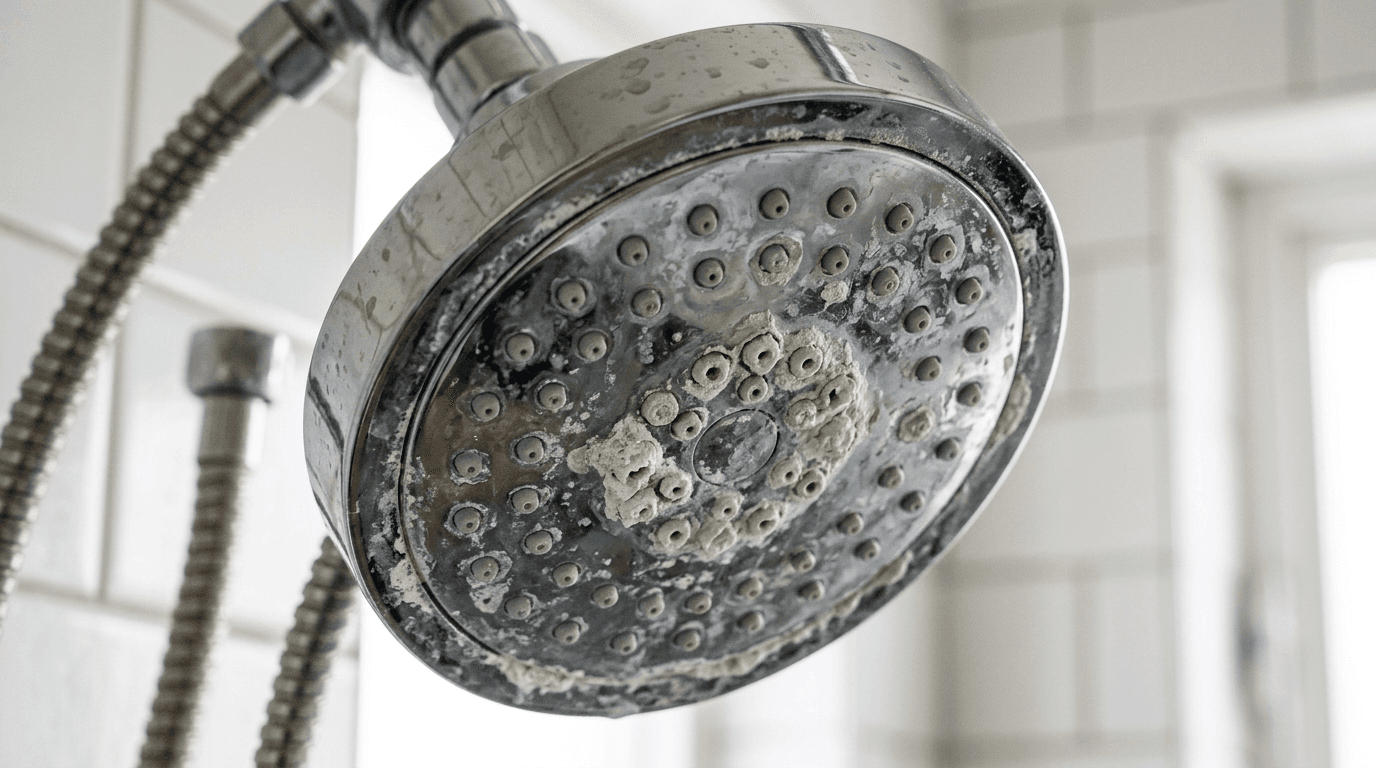
One of the easiest signs of hard water to recognize is a white, crusty residue around faucets, showerheads, and plumbing fixtures. This buildup is commonly called limescale. It forms when water containing dissolved calcium and magnesium leaves mineral deposits behind.
You may notice it around the base of your kitchen faucet, on the openings of your showerhead, or along the edges of bathroom fixtures. At first, the deposits may look like ordinary water spots. Over time, they can develop into thicker, chalky layers that become increasingly difficult to remove.
Why does hard water cause white buildup?
When mineral-rich water evaporates, dissolved minerals can remain on the surface. Heating hard water also encourages certain minerals to form solid deposits. That’s why scale often appears around fixtures that regularly come into contact with warm water.
What can you do about it?
For light mineral deposits, cleaning with white vinegar or an appropriate descaling product may help. Always check whether the cleaning product is safe for your fixture’s finish. Acidic cleaners can damage natural stone and some specialty surfaces.
Cleaning removes existing deposits, but it doesn’t change the hardness of your water. If the buildup repeatedly returns, a properly sized water softener can help reduce future scale formation.
2. Cloudy Glasses and White Spots on Dishes
Have you ever unloaded your dishwasher only to discover that your clean glasses look cloudy? Or noticed small white spots covering plates, silverware, and drinking glasses? Hard water may be responsible.
As water droplets dry on dishes, they can leave mineral residue behind. This often creates a cloudy film or small white spots that remain even after the dishes have been washed. You might notice the problem most clearly on clear drinking glasses, dark plates, and stainless steel utensils.

Are cloudy dishes always caused by hard water?
Not necessarily. Dishwasher detergent, incorrect rinse-aid settings, and permanent glass etching can also contribute to cloudy glassware.
One way to investigate is to see whether the cloudy film can be removed using a glass-safe mineral deposit cleaner. If the film comes off, mineral buildup is a possible cause. Permanent etching generally won’t disappear with cleaning.
What can you do about it?
Using dishwasher rinse aid and following the manufacturer’s detergent recommendations may help reduce visible spotting. However, if hard water is the underlying cause, those measures don’t remove hardness minerals from your water supply. A water softener can reduce the minerals responsible for recurring deposits.
3. Soap Scum That Keeps Coming Back
If you’re constantly scrubbing your shower, bathtub, or bathroom sink, hard water may be contributing to the problem. Soap scum is the cloudy, sometimes sticky residue that accumulates on shower walls, doors, tubs, and other surfaces.
It forms partly because calcium and magnesium in hard water react with certain soap ingredients. The resulting residue can cling to bathroom surfaces and become difficult to remove.
Why is soap scum worse with hard water?
Traditional soaps contain compounds that react with hardness minerals. Instead of remaining available for cleaning, some of those soap compounds form insoluble residue. This can leave a film on your shower walls and contribute to buildup around sinks and bathtubs. The harder your water, the more noticeable the problem may become.
What can you do about it?
Regular cleaning and using a shower squeegee can help reduce accumulation. Some synthetic detergents and cleaning products are formulated to perform better in hard water. But if you’re cleaning the same deposits repeatedly, reducing the hardness of your incoming water may offer a more lasting solution.
4. Soap and Shampoo Don’t Lather Very Well
Do you find yourself using more shampoo than expected just to get a good lather? Does it feel like you need extra hand soap or laundry detergent to get things clean? This can be another sign of hard water.
According to the U.S. Geological Survey, hardness minerals interfere with the performance of traditional soaps. Instead of producing an easy lather, some soap reacts with calcium and magnesium to form residue. As a result, homeowners may use more cleaning products than they otherwise would.
How can you tell if hard water is affecting your soap?
Pay attention to how soap behaves when you wash your hands. If it takes considerable effort to produce a lather, or your hands feel coated with residue after rinsing, hard water could be contributing. However, soap formulations differ, and not every product reacts to hardness the same way. The best way to confirm the problem is through water hardness testing.
What can you do about it?
You can try cleaning products formulated for hard water and follow recommended detergent amounts. If testing confirms significant hardness, a water softener may improve the performance of many soaps and detergents throughout your home.
5. Laundry Feels Stiff, Rough, or Looks Dull
Your washing machine may be working perfectly, but hard water can still affect how your clothes feel after washing. Some homeowners notice that towels become stiff, clothing feels rough, or fabrics seem less clean than expected.
Hardness minerals can interfere with detergent performance and contribute to mineral or cleaning-product residue remaining on fabrics. Over time, repeated washing under these conditions may affect the appearance and feel of certain materials.
Why does hard water affect laundry?
When detergent doesn’t perform as intended, soil and residue may be harder to remove. The minerals in hard water can also interact with cleaning products. This doesn’t mean hard water is always responsible for rough or dull laundry. Overloading the washer, using too much detergent, and poor rinsing can produce similar results.
What can you do about it?
Start by following your washing machine manufacturer’s recommendations for detergent type and quantity. If you’ve already ruled out common laundry problems and water testing confirms significant hardness, softening the water may improve washing performance. It can also help reduce the amount of detergent needed with certain products.
6. Your Skin Feels Dry or Your Hair Feels Coated After Showering
Have you ever stepped out of the shower and felt like your skin still had a film on it? Or noticed that your hair seems dull, difficult to rinse, or weighed down by residue? Hard water could be one contributing factor.
When hardness minerals react with soap, residue can remain on the skin or hair. The U.S. Environmental Protection Agency also identifies dry-feeling skin and hair among the potential effects associated with hard water.
Does hard water cause dry skin?
Hard water may contribute to a dry or coated feeling after washing, but dry skin has many possible causes. Weather, hot showers, skincare products, underlying skin conditions, and other environmental factors can all play a role. Dryness alone isn’t enough to diagnose a hard water problem.
If you’re experiencing persistent irritation, itching, or a skin condition, seek appropriate medical advice rather than assuming a water softener will solve it.
What can you do about it?
Try reducing shower temperature, using gentle cleansers, and reviewing your skin or hair care routine. If you also notice mineral buildup on fixtures and poor soap performance, testing your water hardness may help establish whether hard water is contributing. A water softener can reduce the hardness minerals that interact with soaps, although individual skin and hair results vary.
7. Mineral Buildup Affects Water Pressure or Appliances
Some effects of hard water are harder to see because they develop inside your plumbing and appliances. As mineral deposits accumulate, they can restrict water flow through showerheads, faucet aerators, and certain plumbing components. Hard water can also contribute to scale formation inside water heaters, coffee makers, and other equipment that heats water.
How does hard water affect a water heater?
When hard water is heated, calcium carbonate scale can form on internal surfaces. According to the U.S. Geological Survey, scale can reduce heating efficiency and contribute to equipment wear. The extent of the problem depends on water hardness, equipment design, operating temperature, and maintenance.
A water softener can help limit new hardness-related scale, but it won’t automatically repair equipment that already has significant buildup.
What are the warning signs?
Possible indicators include reduced flow from a showerhead, recurring clogged faucet aerators, visible scale inside a kettle, or repeated mineral buildup in a coffee maker.
However, reduced water pressure can also result from plumbing leaks, failing pressure regulators, valve problems, and other issues. If the pressure suddenly drops or several fixtures are affected, have the plumbing evaluated rather than assuming hardness is the cause.
What can you do about it?
Clean accessible fixtures according to the manufacturer’s instructions and maintain water-using appliances as recommended. If hardness testing confirms elevated mineral levels, installing a properly selected water softener may reduce future scale accumulation. Existing appliance problems may still need separate servicing.
Quick Checklist: Are These Signs Showing Up in Your Home?
| What you’ve noticed | Could hard water be involved? |
|---|---|
| White crust around faucets | Yes, a common sign |
| Cloudy glasses after dishwashing | Yes, but other causes are possible |
| Recurring soap scum | Yes |
| Soap doesn’t lather easily | Yes |
| Towels feel stiff after washing | Possibly |
| Skin feels dry or coated | Possibly, but not specific to hard water |
| Scale or restricted flow in fixtures | Yes, though plumbing issues may have other causes |
If multiple signs appear throughout your home, testing your water hardness is a sensible next step. Symptoms can suggest hard water, but a hardness test is the best way to confirm it.
How to Test for Hard Water at Home
You don’t necessarily need an expensive test to determine whether your home has hard water. Hardness can be measured using a basic water hardness test kit or through laboratory testing. The results are usually reported in grains per gallon (GPG) or milligrams per liter (mg/L) as calcium carbonate.
Understanding your water hardness results
The U.S. Geological Survey uses the following general classification:
| Water hardness | Grains per gallon (GPG) | mg/L as calcium carbonate |
|---|---|---|
| Soft | 0–3.5 | 0–60 |
| Moderately hard | 3.6–7.0 | 61–120 |
| Hard | 7.1–10.5 | 121–180 |
| Very hard | Above 10.5 | Above 180 |
The GPG values are approximate conversions.
For example, if your water tests at 15 GPG, it falls into the very hard category. That doesn’t automatically mean you need a particular water softener, but significant hardness combined with recurring scale or cleaning problems may justify treatment.
What does your hardness result mean?
Enter your test result and the signs you’ve noticed.
Your water is
Very hard
12.0 GPG · 205 mg/L as CaCO3
Very hard water commonly leads to recurring scale and cleaning problems. A properly sized whole-house water softener is often the most direct way to reduce it.
Next step: estimate the softener size you’d need.
Based on USGS hardness classifications. A hardness result says nothing about whether water is safe to drink.
Request a QuoteOption 1: Use a home hardness test kit
Home test strips and drop-based hardness kits provide a convenient way to estimate mineral hardness. Follow the kit’s instructions and test untreated water. If your home already has a water softener, test a point before the softener as well as a softened-water faucet when possible. Our guide to testing water hardness at home walks through both methods step by step.
Option 2: Contact your water utility
If your home receives municipal water, contact your water provider and ask for the hardness level. Some utilities publish hardness information online. You can also review their annual water quality reports, although these don’t always include hardness measurements. Keep in mind that water conditions may vary when utilities use different sources or blend supplies.
Option 3: Have your water tested
Professional testing can provide a more precise measurement. This is particularly useful if you have private well water or suspect problems beyond hardness. For potential health-related contaminants, use an appropriately certified laboratory and select testing based on your water source and concerns.
A hardness test alone does not determine whether water is safe to drink.
How to Get Rid of Hard Water in Your Home
Once testing confirms hard water, you have several options. The right approach depends on how hard the water is, which symptoms you’re experiencing, and whether you want to treat individual fixtures or the whole house.
1. Clean existing mineral deposits
For minor problems, regular cleaning may be sufficient. A suitable descaling product can help remove existing deposits from certain faucets, showerheads, and appliances. Check manufacturer instructions before using acidic cleaners. Never mix vinegar or other acids with bleach.
This is a low-cost way to manage visible buildup, but it doesn’t reduce hardness in the water itself.
2. Install a whole-house water softener
For homes with significant hardness and recurring household problems, a traditional salt-based water softener is one of the most direct treatment options. It uses ion exchange to reduce calcium and magnesium before water reaches the fixtures served by the system.
Potential benefits include reduced scale formation, improved performance of many soaps and detergents, and fewer hardness-related deposits. Water softeners require salt, regeneration water, and routine maintenance. The EPA recommends considering both salt efficiency and water efficiency when choosing equipment.
For a detailed walkthrough, read Water Softener Installation: What to Expect Before, During, and After, and see water softener installation costs in Texas.
3. Consider a salt-free water conditioner
Some homeowners prefer to avoid a conventional salt-based system. Salt-free conditioners may help limit certain types of scale buildup, depending on their technology and operating conditions. However, most do not actually remove calcium and magnesium from the water.
They should not be assumed to deliver the same results as traditional water softening, particularly for soap performance and actual hardness reduction. Compare both approaches in salt vs. salt-free water softeners.
4. Choose the correct system size
If you’re purchasing a water softener, proper sizing is essential. A system that’s too small may regenerate more frequently than desired or struggle to meet household demand. A larger system isn’t automatically better, either. The right capacity depends on household water consumption, water hardness, usable grain capacity, and flow requirements.
Our guide, What Size Water Softener Do I Need?, explains the sizing process in detail.
Are Hard Water Problems Common in Texas?
Many areas of Texas have naturally mineral-rich water supplies. As water moves through rock and soil, it can dissolve calcium and magnesium before reaching a home. Water derived from limestone formations or certain groundwater sources can contain elevated hardness levels. In Waco, for example, city water calculates to about 7.6 GPG — see Waco water hardness — while SAWS reports San Antonio water at 15–20 GPG.
However, hardness isn’t consistent across the state. A home in Waco may have different water conditions from one in Austin, Dallas, San Antonio, or Houston. Even properties within the same city can receive water from different sources. Municipal treatment practices and private well conditions can also affect water quality.
For Texas homeowners, the practical approach is to test the water entering your home rather than relying on a generalized hardness rating for your city. See where we install on our service areas page.
Is Hard Water Bad for You?
Hard water itself is generally not considered a health hazard. Calcium and magnesium are naturally occurring minerals that people also obtain through food. The primary concerns associated with hard water are usually household maintenance, cleaning performance, and mineral scale formation.
However, hard water and safe drinking water are not the same question. A water supply can be hard while meeting applicable drinking-water standards. It can also be relatively soft while containing an unrelated contaminant. If you’re concerned about drinking-water safety, the appropriate testing goes beyond calcium and magnesium.
A conventional water softener does not disinfect water or remove every possible contaminant. For homeowners comparing treatment methods, see Water Softener vs. Water Filter: Which Does Your Home Need?
Frequently Asked Questions About Hard Water
What are the first signs of hard water?
Some of the earliest noticeable signs are white mineral spots on faucets, cloudy drinking glasses, and difficulty getting soap to lather.
These symptoms can appear before more substantial scale buildup develops inside fixtures or appliances. A water hardness test can confirm whether elevated calcium and magnesium are contributing.
How can I tell if I have hard water without a test?
Look for recurring white deposits around plumbing fixtures, mineral spots on dishes, soap scum, and poor lathering.
However, these signs aren’t conclusive because other household problems can produce similar symptoms. Testing is the most reliable way to establish your water hardness level.
What does hard water buildup look like?
Hard water buildup often appears as white, gray, or chalky residue. It may form around faucets, showerheads, glass shower doors, and appliances.
Orange or brown staining can indicate other problems, such as elevated iron or corrosion, and may require different testing.
Can hard water damage your plumbing?
Yes. Over time, mineral scale can accumulate inside some plumbing components, fixtures, and water-using appliances. Severe buildup may restrict water flow or reduce equipment performance.
However, not every plumbing problem is caused by hardness.
Does boiling water remove hardness?
Boiling may reduce some temporary hardness by causing certain dissolved minerals to precipitate. However, boiling does not reliably remove all hardness, and it is not a practical whole-house treatment solution.
A properly selected water softener is generally more suitable when you want to reduce hardness throughout the home.
Does a water filter fix hard water?
Most standard sediment and activated carbon filters do not remove the dissolved calcium and magnesium responsible for hard water. Some membrane technologies, such as reverse osmosis, can reduce hardness at the point where they treat water.
For whole-house hardness reduction, a traditional ion-exchange softener is a common option.
At what hardness level should I consider a water softener?
Water above approximately 7 GPG is classified as hard, while water above 10.5 GPG is classified as very hard. A softener may be worth considering when hardness is substantial and you’re experiencing recurring scale or cleaning problems.
The decision should also account for household usage, cost, equipment efficiency, and personal preferences.
The Bottom Line: Don’t Ignore the Signs of Hard Water
White mineral deposits, cloudy dishes, recurring soap scum, and poor detergent performance may seem like unrelated household annoyances. But they can all point to the same underlying issue: elevated calcium and magnesium in your water.
The good news is that hard water is a measurable, manageable problem. Start by testing your water hardness. Then determine whether routine cleaning, targeted treatment, or a whole-house water softener is the most practical solution.
You don’t necessarily need the largest or most expensive system. You need equipment that matches your water conditions and the problems you’re trying to solve.
Seeing Signs of Hard Water? Get a Quote From Clearly Water Systems
If you’re constantly cleaning mineral deposits from your faucets, dealing with cloudy dishes, or wondering whether your home needs a water softener, Clearly Water Systems can help you explore your options. We believe homeowners should understand their water before investing in treatment equipment.
Whether you’re considering your first water softener or comparing whole-home water treatment solutions, the right starting point is identifying what your water actually needs.
Last reviewed: November 2026. Household symptoms are not a substitute for water testing. Treatment recommendations depend on actual water quality, equipment performance, and installation conditions.
Sources and further reading