- Matched to certified reduction claims
- Quotes list equipment and work up front
- Pairs with a softener when you need both
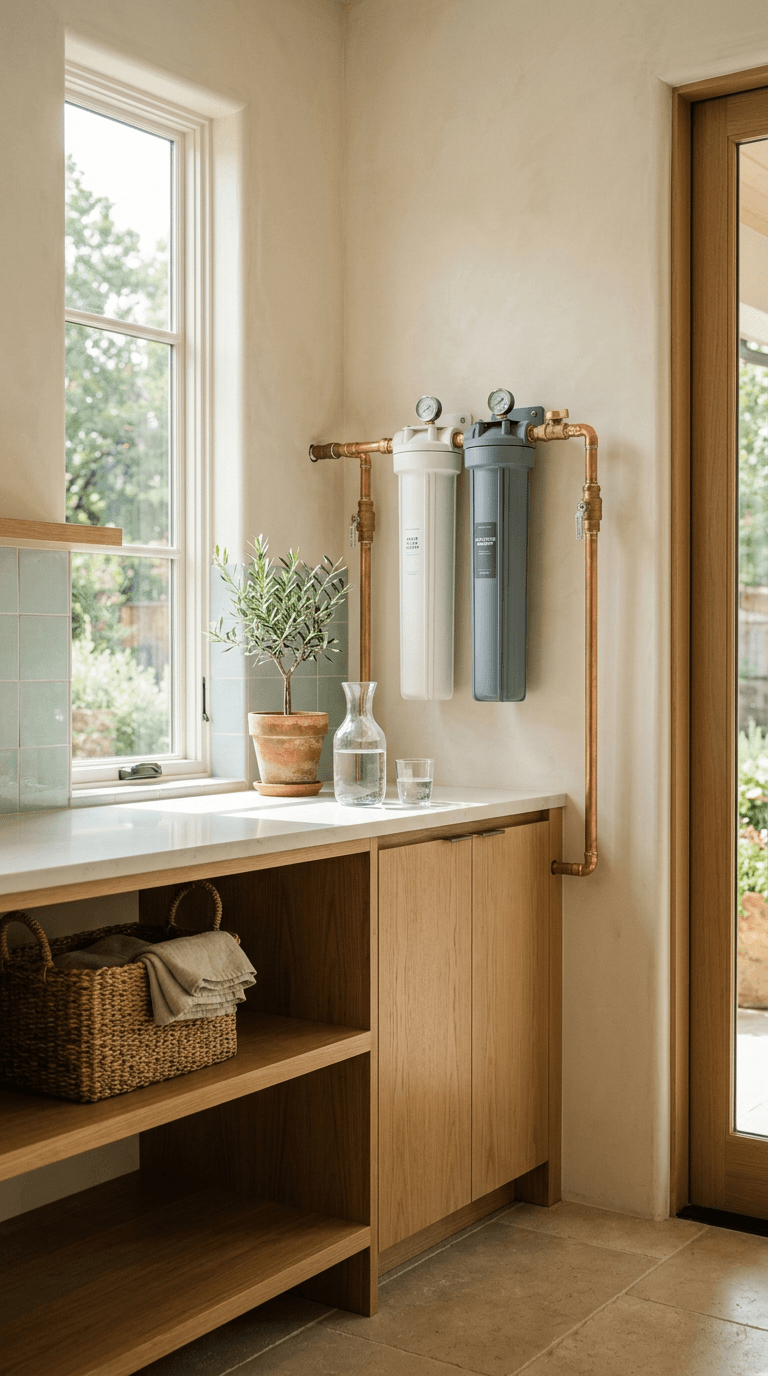
Where it installs
Main water line
Treats every tap in the home
Why filter
What whole-home filtration changes.
Most Central Texas city water is disinfected with chlorine or chloramine — safe, but noticeable in taste and smell. Filtration treats it before it reaches any faucet.
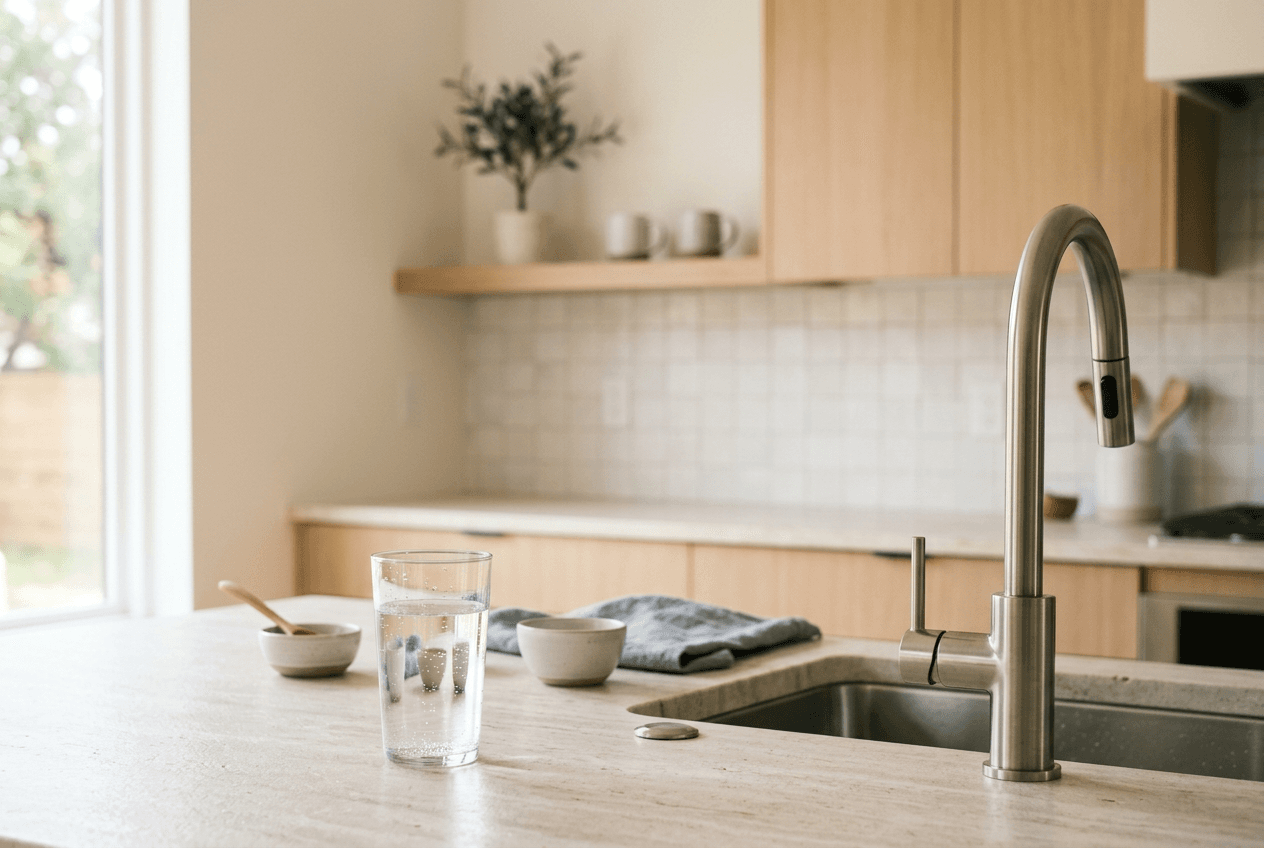
Less chlorine taste and odor
Activated carbon reduces the chlorine taste and smell many people notice in city water — at the kitchen tap, the shower, and everywhere in between.
Sediment caught at the source
Sediment stages capture sand, grit, and rust particles before they reach aerators, valves, and appliances.
Every tap treated
Because it sits on the main line, the same filtered water reaches showers, laundry, and the kitchen.
Works alongside softening
Filtration handles what a softener doesn’t, so the two are often installed together.
- Reduction claims depend on the specific certified model. Whole-home filtration doesn’t soften water, and it isn’t a substitute for laboratory testing if you have health-related concerns.
Free cost tool
See the real cost of a filter.
The cheapest system to install isn’t always the cheapest to own. Compare two options over the years you’ll actually have them:
Installed price
Equipment plus the plumbing work to put it on your main line.
Replacement media
Cartridges or carbon you’ll replace on the manufacturer’s schedule.
Years of ownership
Over time, lower upkeep can outweigh a higher upfront price.
Total cost of ownership calculator
Compare two quotes using their installed price and upkeep.
System A costs $475 less over 5 years.
System B catches up after about 8.8 years of maintenance.
Excludes major repairs, part-price changes, and water or energy costs. A lower total only matters if the system also delivers the treatment your water needs.
How it works
Three steps to filtered water.
- 1
Identify what you want to change
Taste and odor, sediment, or a specific contaminant? Your utility’s annual water report — or a lab test for wells — shows where to start.
- 2
Match the system to certified claims
Media type, flow rate, and certification for the exact reduction you want. Your quote describes the equipment and work before you decide.
- 3
Arrange installation and media changes
The system goes on your main line with a bypass valve. Afterward, care is mostly replacing media on the manufacturer’s schedule.

Activated carbon, up close
The basics
What does whole-home filtration actually do?
A whole-home — or point-of-entry — filter is installed where water enters the house, so every tap receives filtered water. Most systems combine a sediment stage that physically traps particles with an activated carbon stage that adsorbs chlorine and the taste and smell it can leave.
Each filter is designed and certified for specific contaminants. Two systems that look alike can have very different claims, so the certification for the exact model — not the category — is what tells you what it reduces.
Filtration addresses
- Chlorine taste and odor throughout the home
- Sand, grit, and rust particles
- Specific contaminants — only when the model is certified for them
It isn’t designed to
- Remove hardness minerals or prevent scale
- Disinfect water or treat bacteria
- Reduce total dissolved solids
Scale and spotting are a job for a water softener. For drinking-water concerns, compare RO vs. whole-house filtration or read water softener vs. water filter.
Before you buy
Whole-house filtration cost in TexasChoosing a system
- Target concern
- Chlorine, sediment, or a specific contaminant decides the media.
- Certification
- Confirm the exact model is certified for the claim you care about.
- Flow rate
- Sized for peak use so showers and appliances keep their pressure.
- Pre-filtration
- A sediment stage protects carbon media from clogging.
What affects the quote
- System type and stages
- Cartridge housings or larger carbon tanks.
- Main-line access
- How easily the system can be plumbed where water enters.
- Bypass and valves
- So the system can be isolated for service.
- Pairing with a softener
- Installing both together, in the right order.
Ongoing care
- Media replacement
- Cartridges and carbon on the manufacturer’s schedule.
- Pressure gauges
- A widening drop across the filter signals a change is due.
- Changes in taste
- Returning chlorine taste often means spent carbon.
- Retesting
- Worth doing if your water source or concerns change.
Service areas
Installing in Waco and across Central Texas.
Each area page covers local water from the utility’s own report. Enter your ZIP code to confirm we install at your address.

Questions
Filtration questions, answered.
Does whole-home filtration soften water?
No. Carbon and sediment filters don’t remove the calcium and magnesium that cause hardness, so scale and spotting will continue. If hardness is the problem, a water softener is the tool for it — and many homes use both.
Will a whole-house filter remove lead or PFAS?
Only if the specific model is certified for that reduction claim, and only for the conditions it was tested under. Many whole-house carbon filters are certified for chlorine taste and odor, not health-related contaminants. For drinking water concerns, a certified point-of-use system such as reverse osmosis is often the more practical choice.
How often do whole-home filters need replacing?
It depends on the media, your water, and how much water the household uses. Sediment cartridges usually need changing more often than large carbon tanks. Follow the manufacturer’s schedule — a spent filter stops performing even though water still flows through it.
Does a whole-home filter reduce water pressure?
Some pressure drop is normal with any filter. A system sized for your home’s peak flow keeps it small. A noticeable drop over time usually means a cartridge is clogged and due for replacement.
Can a softener and a filter be used together?
Yes. Many homes pair a softener with filtration because each handles something the other doesn’t. Whether that makes sense for your home depends on your water and what you want to change.
What information helps with a quote?
Your ZIP code, whether you’re on city water or a private well, roughly how many people live in the home, and what you’re noticing about your water. Photos of where your main water line enters the house are helpful but not required. You don’t need to know which equipment you need.
Ready for a better water experience?
Tell us what you’d like to change about your water, and explore your options. We’ll put together an estimate that spells out the equipment and installation before you decide.