Buying guide · Texas
Water Softener and Filtration Combo: Is It Worth Buying Both?
A softener and whole-house filter are worth buying together when your home has both hard water and a separate water quality problem — such as chlorine taste, odor, or a contaminant the selected filter is certified to reduce.
Updated 13 min read
Quick answer · Published installed estimates
$1,200–$3,800
Traditional salt-based water softener
$850–$1,400
Basic whole-house carbon and sediment filtration
$2,650–$5,400
Filtration, softener, and UV combination
The two systems perform different jobs, and combining them can address problems that neither system solves alone. But not every home needs both.
If your primary concern is white mineral buildup on shower doors, a water softener may be all you need. If your water tastes like chlorine but doesn’t have significant hardness, a filtration system might be the better investment. For homeowners in Texas, where water conditions vary considerably by location and water source, understanding the difference can prevent an expensive purchasing mistake.
Here’s how water softener and filtration combinations work, how much they cost, and when investing in both makes sense.
What’s the Difference Between a Water Softener and a Water Filtration System?
Although water softeners and filtration systems are frequently sold together, they solve different problems. A traditional water softener is designed to remove the minerals responsible for hard water. A filtration system targets specific particles, chemicals, or other substances depending on the filtration technology. Neither should be assumed to replace the other.
| Feature | Water softener | Water filtration |
|---|---|---|
| Reduces calcium and magnesium hardness | Yes | Not usually |
| Reduces mineral scale buildup | Yes | Depends on technology |
| Reduces chlorine taste and odor | No | Yes, with appropriate carbon filtration |
| Removes sediment | Not its primary function | Yes, with sediment filtration |
| Reduces certain chemical contaminants | Not its primary purpose | Yes, with appropriate certified equipment |
| Removes harmful microorganisms | No | Only with suitable treatment technology |
| Requires maintenance | Yes | Yes |
Understanding this distinction is the first step toward choosing the right system.
What does a water softener actually do?
A conventional salt-based water softener uses a process called ion exchange. As water passes through the system, calcium and magnesium ions are exchanged for sodium or potassium ions. Those hardness minerals are responsible for many familiar household problems, including:
- White scale buildup on faucets and shower glass
- Soap scum in showers and bathtubs
- Reduced soap and detergent performance
- Mineral deposits inside water-using appliances
- Stiff or dull-feeling laundry
A properly functioning water softener reduces the hardness minerals that contribute to these problems. However, a water softener is not a general-purpose drinking-water purifier. It doesn’t reliably remove chlorine taste, disinfect water, or address the full range of potential drinking-water contaminants.
What does a whole-house water filter do?
A whole-house filtration system (see our whole-house filter buying guide) treats water as it enters your home. Depending on its design, it may use sediment cartridges, activated carbon, specialized media, or other treatment technologies. For example, activated carbon filters are commonly used to reduce chlorine taste and odor, while sediment filters capture suspended particles. Some advanced filtration systems are certified to reduce particular contaminants that have health effects.
But a standard carbon filter generally does not remove the dissolved calcium and magnesium that make water hard. This is why adding a conventional carbon filter won’t necessarily eliminate the white mineral deposits on your shower doors. For a full side-by-side breakdown, see our water softener vs. water filter comparison.
Is a Water Softener and Whole-House Filter Combo Worth It?
For the right household, yes. Combining a water softener with an appropriately selected filtration system can provide broader treatment than either system alone. The most compelling reason to install both is when water testing or other reliable evidence identifies two different treatment needs.
1. You have hard water and unpleasant-tasting tap water
Imagine living in a home where your shower fixtures regularly develop white mineral deposits and your tap water has a noticeable chlorine taste. A water softener can address the hardness, but it won’t remove chlorine taste. A properly selected carbon filtration system can improve chlorine-related taste and odor, but it won’t soften the water. Combining the two addresses both concerns — a common reason homeowners consider a whole-house filter and softener combination.
2. You want to address multiple household water problems
Hard water affects more than the water you drink. It can create scale deposits on showerheads, fixtures, and inside water-using appliances. Other water quality concerns may affect the taste, smell, or appearance of water throughout your home. A combination system can target these problems separately — for example, a water softener for hardness and a sediment filter for visible particles. The actual combination should depend on the water source and test results.
3. Your water quality requires more than one treatment method
Some water supplies contain multiple substances that require different treatment technologies. This can be particularly relevant for properties using private wells. A home with hard water and elevated iron, for example, may need specialized iron treatment alongside softening. A property with confirmed microbial contamination needs an appropriate disinfection strategy rather than simply adding a carbon filter.
No single treatment system removes every possible contaminant. The CDC recommends selecting treatment equipment based on the specific substances present in your water.
When Is Buying Both Systems a Waste of Money?
There are also situations where purchasing a water softener and filtration combination doesn’t make financial sense.
Adding filtration without identifying another problem increases equipment and maintenance expenses. If your concern is limited to drinking and cooking water, an under-sink reverse osmosis system treats water at one location rather than every fixture in the home (compare reverse osmosis vs. whole-house filtration). Water treatment should address an identified need rather than simply provide more equipment.
How Much Does a Water Softener and Filtration Combo Cost?
The cost depends on the equipment, installation requirements, and treatment technology. Published national pricing estimates provide the following benchmarks:
| Water treatment option | Estimated installed cost |
|---|---|
| Traditional salt-based water softener | $1,200–$3,800 |
| Basic whole-house carbon and sediment filtration | $850–$1,400 |
| Multi-stage whole-house filtration | $1,850–$2,900 |
| Filtration, water softener, and UV combination | $2,650–$5,400 |
These are published national planning estimates, not Clearly Water Systems quotes. The combination-system range refers to a particular multi-stage configuration that includes UV treatment; simpler or more specialized combinations may cost less or more.
For a home requiring both water softening and whole-house carbon filtration, the total price will depend on whether the equipment is purchased as a package or installed separately. Additional plumbing, specialized treatment media, drainage, and electrical requirements can increase costs. An existing water softener loop may simplify installation and reduce labor expenses.
Is it cheaper to install both systems at once?
It can be. When both systems are needed, a coordinated installation may reduce duplicated labor compared with having two separate installations performed at different times. However, savings aren’t guaranteed. The amount depends on whether the systems can share suitable plumbing connections, how the equipment must be configured, and whether additional work is required.
Before buying a combination package, compare the total installed price against separately purchased equipment. Also consider warranty coverage, replacement parts, and long-term serviceability. For more detailed pricing, see our guides to water softener installation costs in Texas and whole-house water filtration system costs.
Should You Buy a Combination Unit or Two Separate Systems?
One of the most overlooked decisions is whether to buy a packaged combination or separate water treatment units. Both approaches can work.
Combination water treatment packages
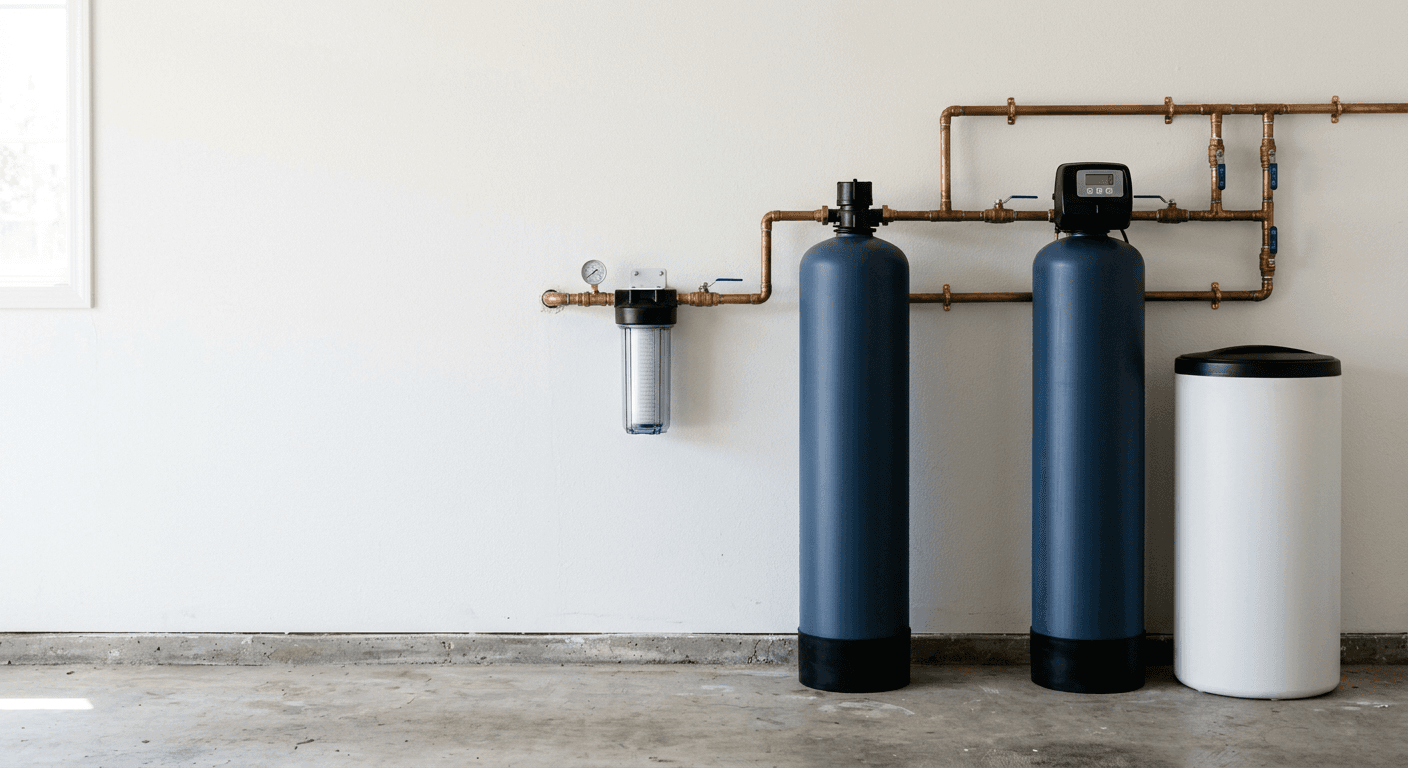
Some manufacturers sell a softener and whole-house filtration equipment together as a matched package. These packages may include multiple tanks connected as one treatment system, while other products use more integrated configurations. Potential advantages include equipment selected to work together, a more coordinated installation, and simplified purchasing.
However, a package is not automatically better than separate systems. Make sure the actual softening capacity, filtration performance, and water flow specifications meet your household’s needs.
Separate water softener and filtration units
Buying separate units provides more flexibility. For example, you may want a particular high-efficiency water softener paired with a carbon filter from another manufacturer. Separate components can also allow you to replace or upgrade one treatment stage without replacing everything.
The downside is that the equipment must be properly matched and installed. You should also verify whether the system maintains adequate water pressure when several household fixtures are used simultaneously.
Our recommendation: Compare specific treatment performance and long-term maintenance costs, not just whether a product is marketed as an all-in-one system.
Which System Should Be Installed First: The Water Softener or the Filter?
There isn’t one installation order that works for every home. The right configuration depends on your water source, treatment equipment, and manufacturer specifications.
For some municipal water installations, a compatible carbon filtration system is installed before the softener. Reducing chlorine exposure can help protect certain softener resin materials. Sediment pretreatment may also be placed upstream to prevent particles from entering sensitive equipment. Well water systems may require a different treatment sequence, particularly if iron, sediment, or other contaminants are present.
The installer should determine the arrangement using actual water chemistry, equipment requirements, and the manufacturer’s instructions.
Whole-house removal of chlorine or other disinfectants can increase the potential for microbial growth in household plumbing. The CDC specifically cautions homeowners about this risk. If you’re considering whole-house dechlorination, discuss whether it is necessary and what maintenance and water safety precautions are appropriate.
How Much Maintenance Does a Water Softener and Filter Combo Need?
Owning two types of treatment equipment also means maintaining two types of systems.
Water softener maintenance
A traditional salt-based softener typically requires regular salt refills and occasional servicing. The frequency depends on water hardness, household demand, and regeneration efficiency. A properly sized demand-initiated softener can reduce unnecessary salt and water use compared with less efficient configurations.
Water filter maintenance
Filtration maintenance depends on the filter media. Cartridge filters may require relatively frequent replacement. Larger media systems may operate longer between changes, depending on water quality, capacity, and manufacturer requirements. Some systems also require periodic backwashing or additional service. Ask about replacement filter costs before purchasing.
Are combination systems more expensive to maintain?
Generally, maintaining a softener and a separate filtration stage involves more ongoing expenses than operating one treatment technology alone. But those costs may be justified when the systems solve different problems. Compare the expected cost of salt, filter replacements, water consumption, servicing, and eventual equipment replacement. A lower upfront price isn’t always the best long-term value.
Do You Need a Water Softener and Filter for Texas Water?
Texas homeowners frequently encounter hard water, although conditions vary significantly by location and water source. The state’s geology, groundwater sources, municipal treatment practices, and local distribution systems all influence water quality. A home in Waco may have different needs from a property in Austin, Dallas, Houston, or San Antonio. Even neighboring properties may receive water from different sources.
Homes using municipal water
If your home receives water from a public utility, begin by reviewing its annual Consumer Confidence Report. This report provides information about the utility’s water quality and regulated contaminants. You can also test the hardness of water at your home.
If testing shows significant hardness and you also have a separate reason for filtration, a combination system may make sense. However, municipal treatment alone doesn’t mean you need a whole-house filter.
Homes using private well water
Private wells require additional attention because homeowners are responsible for monitoring their own water quality. The CDC recommends testing private well water at least annually for total coliform bacteria, nitrates, total dissolved solids, and pH. Other testing may be appropriate depending on local conditions. Well water may require specialized treatment for iron, manganese, or other identified concerns.
Don’t assume that a conventional water softener and carbon filter can make contaminated well water safe to drink. If testing identifies harmful microorganisms or chemicals, select an appropriate treatment method and confirm its effectiveness through follow-up testing.
How to Know Whether Your Home Needs Both Systems
Before spending thousands of dollars, work through these questions in order.
1. Is your water actually hard?
White mineral scale, soap scum, and poor detergent performance can suggest hardness problems, but testing provides a more useful measurement.
2. Do you have a separate filtration concern?
Unpleasant taste, odor, sediment, or an identified contaminant may justify additional treatment. Not every water quality concern can be identified by appearance or taste.
3. Does the recommended system remove what you need removed?
Ask for the exact model and independently verified performance claims. For example:
| Standard | What it covers |
|---|---|
| NSF/ANSI 44 | Residential cation-exchange water softeners |
| NSF/ANSI 42 | Certain aesthetic filtration claims, including chlorine taste and odor |
| NSF/ANSI 53 | Specific health-related contaminant reduction claims |
| NSF/ANSI 58 | Reverse osmosis treatment systems |
Certification to a standard doesn’t automatically mean a product removes every substance covered by that standard. Always check its specific certified claims.
4. Do you need treatment at every faucet?
If your main concern is drinking water, consider whether point-of-use filtration would be more economical. If the problem affects water throughout the house, a whole-house treatment approach may be appropriate.
5. Have you compared the total cost?
Look beyond the equipment price. Compare installation, salt use, replacement filters, maintenance, warranties, and expected equipment lifespan.
The goal is to purchase the right treatment — not the most treatment.
Frequently Asked Questions
Can a water softener and filter be installed together?
Yes. Water softeners and filtration systems are commonly combined when homeowners need to address both hardness and separate water quality concerns. The configuration should match the water supply, equipment specifications, and plumbing requirements.
Does a water softener filter drinking water?
A traditional water softener reduces hardness minerals through ion exchange. Although certain specialty systems have additional treatment capabilities, a standard softener should not be treated as a replacement for a certified drinking-water filter or disinfection system.
Do I need a carbon filter if I already have a water softener?
Not necessarily. A carbon filter may be useful if you have chlorine taste, odor, or another problem that the particular filter is certified to address. If hardness is your only concern, additional carbon filtration may not be needed.
Can I add a whole-house filter to my existing water softener?
In many cases, yes. An installer can assess your existing plumbing, available space, treatment goals, and equipment compatibility. You may not need to replace a functioning softener simply to add filtration.
Are salt-free water conditioners the same as water softeners?
No. Traditional salt-based softeners remove calcium and magnesium hardness through ion exchange. Many salt-free conditioners are designed to reduce certain types of scale formation without removing those minerals. If you want actual hardness reduction, verify the technology before purchasing.
Will a water softener and filtration combo make my water safe to drink?
Not automatically. Safety depends on your starting water quality, the treatment technologies selected, their certified performance, and proper maintenance. If water testing identifies harmful contaminants, choose equipment specifically designed and verified to address them.
Is a combination system worth the extra money?
It’s often worth considering when both hardness and a separate filtration problem are confirmed. If only one treatment need exists, purchasing two systems may create unnecessary expense.
The Bottom Line: Should You Buy Both?
A water softener and whole-house filtration system can be a smart investment, but only when both serve a purpose. A water softener addresses hardness minerals that contribute to scale and soap performance problems. A filtration system addresses specific water quality concerns based on its technology and performance claims.
When your home experiences both types of problems, combining the systems can provide a more complete treatment solution. When it doesn’t, buying both may simply increase your upfront and maintenance costs. The best water treatment system is the one selected for your actual water conditions — not the one with the most equipment.
Find the Right Water Treatment System With Clearly Water Systems
Not sure whether your home needs a water softener, a filtration system, or both? Clearly Water Systems helps homeowners explore water treatment options based on their household needs and water quality concerns. Rather than purchasing equipment based on guesswork, start by understanding what your water requires.
Last reviewed: November 2026. Costs are general budgeting estimates, not Clearly Water Systems installation prices. Water treatment requirements depend on individual water chemistry, equipment selection, and local installation conditions.
Sources and further reading